
How to Select Weather-Resistant Furniture for Open-Air Restaurants
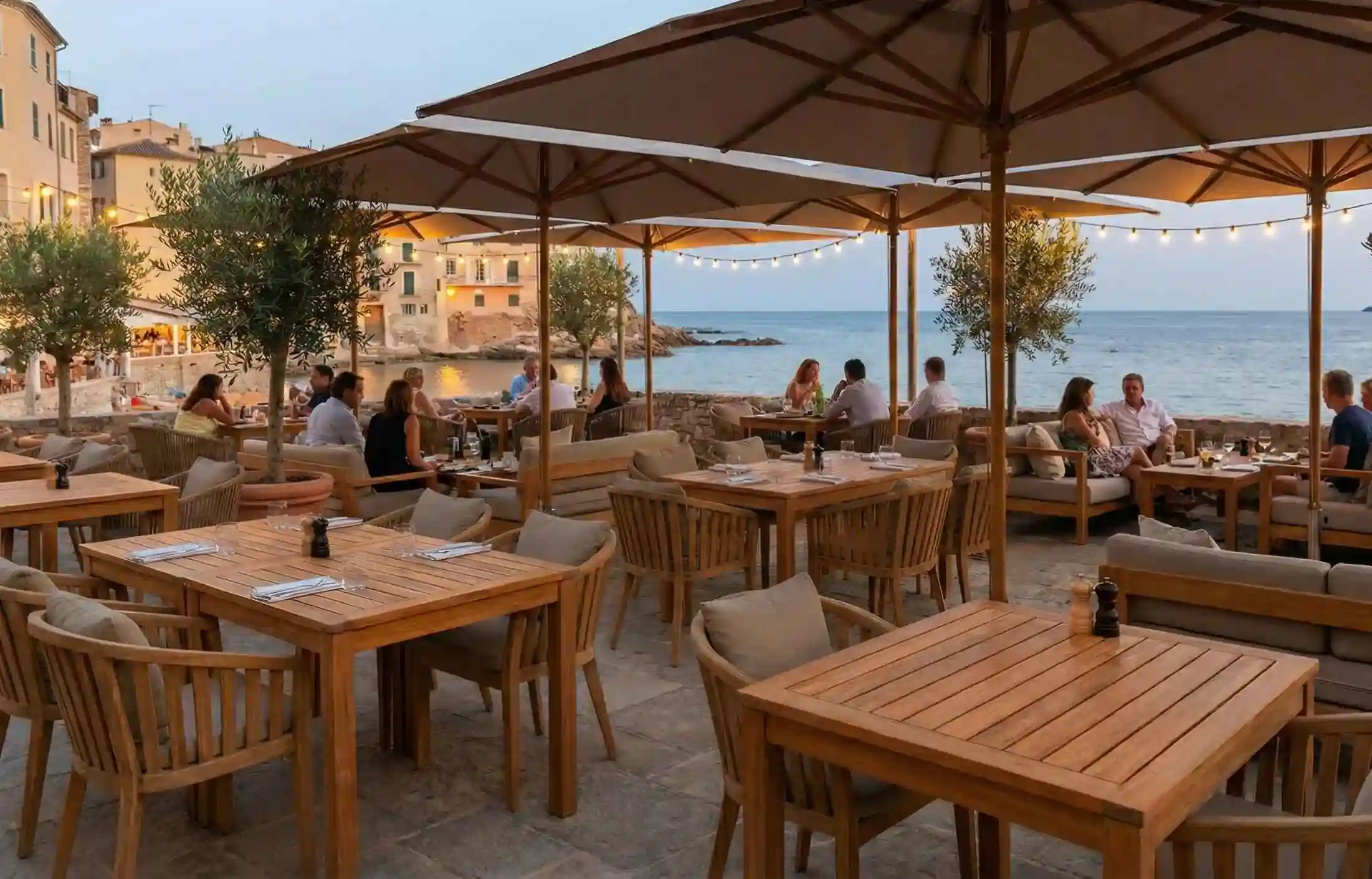
Open-air dining sells a feeling. It also exposes furniture to sun, humidity, rain, and daily commercial handling. Restaurant furniture absorbs daily pressure from guest turnover, staff movement, and shifting weather. Outdoor seating remains important for revenue. About 20% of full-service restaurants keep patios open in winter, while 68% operate them until October (Restaurant). Weather-resistant furniture protects stability.
Selection depends on climate exposure, material stability, construction integrity, and supplier capability.
The following factors help restaurants choose weather-resistant outdoor furniture for reliable open-air dining.
Understand the Climate Your Patio Lives In
Every open-air restaurant exists within its own climate pattern. Salt air, humidity shifts, rainfall, and strong sunlight shape how furniture ages.
The right starting point is exposure mapping. Identify the hours of direct sun, water pooling zones, wind lanes, and storage limitations. Weather-resistant furniture performs best when the selection matches the site, not the catalog.
Related – Why Bulk Outdoor Furniture Sourcing Requires Manufacturing Support
Choose Hardwoods Built for Exterior Service
Material quality decides lifespan. Outdoor dining furniture fails fastest when wood lacks density or moisture resistance.
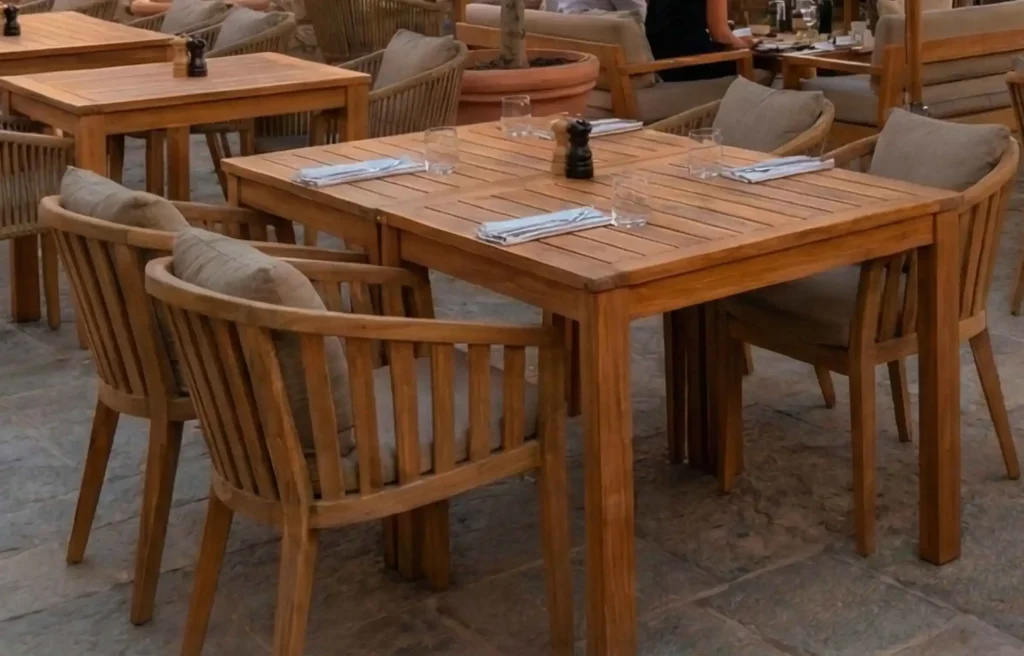
Exterior hospitality environments often rely on teak. Its tight grain and natural oils help protect against moisture and surface damage.
For restaurants that plan repeated seasons outdoors, hardwood selection shapes replacement cycles and long-term stability.
Treat Moisture Control as a Manufacturing Issue
Outdoor moisture steadily tests furniture construction. Humidity and rainfall force wood to shift, exposing weaknesses in poorly built structures.
Studies show wood can expand by up to 3–5% in high-humidity environments, which increases strain on poorly manufactured furniture.
Stable moisture levels and kiln-dried wood support durable outdoor furniture.
Evaluate Finishes Based on the Sun and Service Reality
A finish must handle UV exposure and cleaning routines. Outdoor dining involves spills, chemicals, wiping, and repeated contact.
Select finishing treatments that protect wood surfaces while allowing natural airflow. Teak oils and exterior coatings help slow weathering and preserve uniform color.
Inspect Joinery Like You Would Inspect a Kitchen Hood
Joinery decides if a chair stays stable in year three. In open-air restaurants, movement is constant, and joints take repeated loads.
Look for robust joinery systems and reinforced stress points. Weather-resistant furniture needs structural integrity that remains stable under daily repositioning, stacking, and service pressure.
Also read – Why Indonesian Wooden Furniture is the Smartest Investment for Villa Developments
Prioritize Weight and Stability in Windy Layouts
Lightweight furniture shifts. In open-air dining, sudden wind and uneven surfaces turn instability into risk.
Select furniture with balanced weight, stable bases, and frames that resist movement. Pieces must remain steady during service while allowing staff to rearrange layouts easily.
Restaurants in coastal zones face steady wind movement. Rooftop patios experience shifting air currents. Street-side terraces also deal with unpredictable airflow. Stable furniture protects guest safety and keeps service running smoothly.
Stability rarely attracts attention when it works. A chair that remains steady under shifting conditions quietly protects the rhythm of service and the confidence of guests.
Plan for UV Wear and Visual Aging
Sun exposure degrades finishes and fades color. This matters because restaurant patios appear in photos, reviews, and social posts.
Outdoor investment trends keep rising, and operators are expected to build exterior seating that holds visual standards longer.
Materials and finishes designed for exterior exposure, slow fading and surface breakdown. Stable appearance across seasons protects how the restaurant is perceived online and on-site.
Visual aging happens gradually. What begins as a faint loss of color can slowly reshape how a dining space is remembered and photographed.
Make Maintenance Realistic for Restaurant Staff
Maintenance plans fail when they require specialist labor every few weeks. Restaurants need furniture that fits operational bandwidth.
Weather-resistant furniture should handle routine cleaning, occasional treatment, and seasonal checks without requiring constant repair.
If maintenance becomes a weekly task, lifecycle cost rises quickly through labor and downtime.
Furniture designed for commercial use simplifies daily operations. Staff can focus on service instead of constant adjustments or repairs.
The best maintenance strategy is the one that remains almost invisible. Durable furniture quietly absorbs daily pressure without asking for attention.
Balance Comfort with Commercial Durability
Guests stay longer in seats that feel right. Comfort supports revenue and table experience, yet comfort must not undermine strength.
Look for ergonomics that hold up under volume: appropriate seat angles, solid frames, and stable table heights.
Weather-resistant furniture must deliver comfort that survives daily traffic.
Well-designed seating encourages longer dining experiences while maintaining structural reliability during heavy turnover.
Seating that feels welcoming at the start of service must still carry strength when the dining room reaches full pace.
Maintain Visual Consistency Across the Dining Area
Open-air dining looks best when furniture lines match across the space. When sourcing lacks discipline, later replacements introduce a mismatch.
Uniform sizing, consistent finishes, and repeatable production protect brand presentation. In restaurants, inconsistency reads like neglect, even if the food performs well.
Visual harmony strengthens the identity of the dining space. Guests experience the environment as intentional and professionally maintained.
Consistency rarely demands attention directly. Instead, it creates a quiet sense of order that shapes how guests interpret the entire dining experience.
Calculate Lifecycle Cost, Not Purchase Price
Outdoor seating creates recurring costs if replacement cycles stay short. Lifecycle planning protects margins.
Commercial buyers often gain stability by investing once in durable construction and avoiding repeat procurement.
Weather-resistant furniture that lasts reduces disruption, protects guest experience, and keeps capex forecasting controlled.
Strong materials and disciplined manufacturing reduce long-term expenses that quietly accumulate through repairs and replacements.
The true cost of furniture often appears years after installation, when durability either protects the investment or forces it to begin again.
Recommended read – How to Choose High-Quality Outdoor Furniture for Home
Choose Suppliers with Manufacturing Capacity and Export Discipline
Supplier strength matters most when the order grows. Restaurants expanding patio footprints or multi-site groups need repeatability.
Indonesia remains a major export base for wood furniture.
Export-experienced manufacturers organize production with precision. Quality standards remain controlled. Shipping follows predictable timelines.
A dependable supply chain begins long before the furniture arrives on site. It starts in factories where production discipline and export knowledge shape every shipment.
Consistency across projects often reflects the strength of the production system behind it.
Frequently Asked Questions (FAQ) About Weather-Resistant Furniture
1. What material works best for weather-resistant furniture in restaurants?
Teak and dense hardwood materials offer reliable outdoor durability when processed and finished with precision.
2. Does outdoor furniture need frequent maintenance?
Routine cleaning and basic seasonal care usually keep commercial-grade pieces stable.
3. What causes early failure in patio furniture?
Weak joinery, poor moisture control, and low-grade finishing systems tend to fail first.
4. How can a restaurant reduce replacement cycles?
Select commercial-grade materials, stable construction, and consistent manufacturing standards.
5. What should buyers check in suppliers?
Production capacity, material control, repeatable specs, and export logistics discipline.
Outdoor Furniture Built for Restaurant Environments
At All Seasons Furniture, we offer durable, high-quality teak outdoor solutions for commercial environments where reliability and consistency matter. Our manufacturing scale supports hospitality projects that require dependable production timelines and stable supply.
We produce every collection with careful attention to structural strength, material stability, and long-term outdoor performance. Our solid teak construction helps restaurants maintain consistent visual standards while reducing maintenance and replacement cycles across high-traffic dining areas.
Get in touch to review your restaurant requirements and explore outdoor furniture built for long-term use.
You can also reach us directly at +62 857 8177 7489 for project discussions and inquiries.
Wrapping Up!
Open-air restaurants win on atmosphere, but they lose money when furniture fails early. Weather-resistant furniture selection works best when it starts with climate exposure, then moves into material integrity, construction strength, and supplier reliability. Durable hardwoods, strong joinery, appropriate finishing, and disciplined manufacturing protect both appearance and operating costs.
For restaurants, performance over time is the real metric.