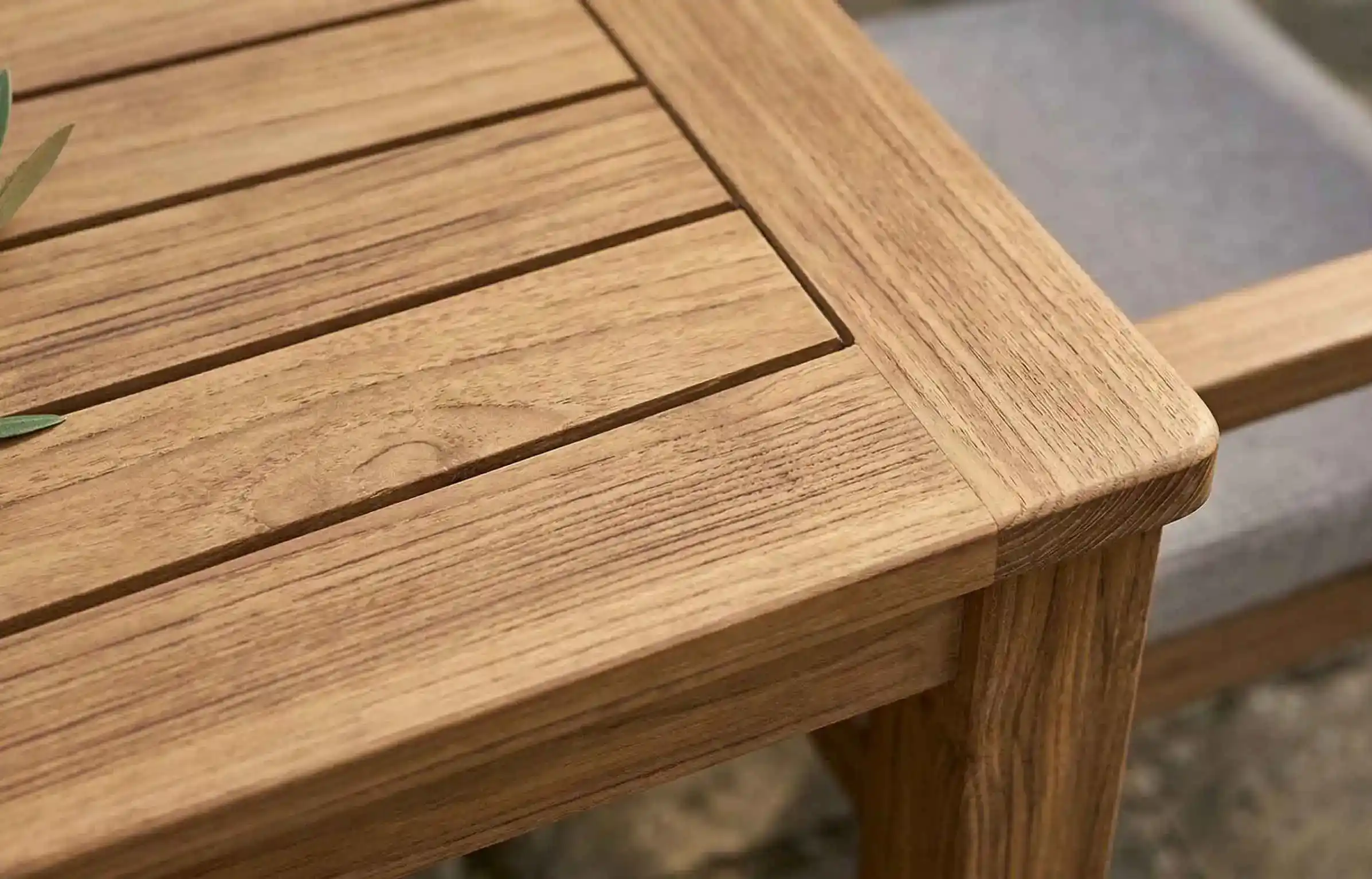
The Role of Wood Grain in Outdoor Furniture Strength
You’re investing in outdoor furniture. A purchase you hope will last through years of summer gatherings, seasonal weather changes, and daily use. Yet furniture that looked solid in the showroom can develop cracks, warp, or crumble within a year or two outdoors. The culprit often comes down to something you might not have considered – wood grain. When shoppers and manufacturers talk about wood grain, grain direction, and structural integrity, they’re discussing something fundamental. It’s whether your furniture will actually hold up.
This guide explains how wood grain affects outdoor furniture durability. It shows why understanding this matters for your investment.
By learning what questions to ask and what to look for, you’ll make smarter purchasing decisions and get more years of use from your outdoor pieces.
What is Wood Grain?
Wood grain is the visual pattern and structural alignment of wood fibers inside a tree. Think of it like the growth pattern of the tree itself. Each year, the tree adds a new ring, and the grain lines show those patterns.
But here’s what matters for your furniture – the wood fibers inside aren’t random. They follow a specific direction, almost like they’re lined up in rows. This alignment is crucial because it determines how strong the wood is in different directions.
Why this matters in practice –
Trying to pull a rope apart lengthwise versus trying to snap it sideways. The rope is strongest along its length because all the fibers are aligned that way. Wood works the same way. A piece of furniture with grain aligned one direction will be strong along that direction but much weaker across it.
Common grain patterns you’ll encounter –
- Straight grain – Fibers run parallel and uniform. This is ideal. It’s predictable and strong in a consistent direction
- Interlocked grain – Fibers alternate direction in layers. Common in tropical hardwoods like teak. More complex, but can offer better all-around strength
- Wavy grain – Fibres follow a wave-like pattern. Looks beautiful, but creates variable strength zones
- Irregular grain – Random fiber orientation. Usually weaker overall and unpredictable
The key insight – wood is not the same strength in all directions. Understanding which direction the grain runs in your furniture tells you a lot about how strong it really is.
Related – How to Buy Furniture from Indonesia: Why Teak is Reshaping Hospitality Design
Why Direction Matters More Than You’d Think
Here’s a practical example – Two identical wooden chairs. Both made from the same species, same thickness, same design. But one has grain running vertically through the legs, while the other has grain running horizontally.
The first chair could support a person’s weight for decades. The second might develop a crack in the leg after a season or two.
This isn’t about the wood being “bad.” It’s about grain direction. And it’s the reason smart furniture makers obsess over how they orient the grain.
Along the grain – Wood fibers are aligned in the same direction as the stress being applied. The fibers can handle the load efficiently. This is why you feel stable sitting in a well-made chair. The grain in the legs is running vertically to handle compression.
Across the grain – When you apply force perpendicular to the grain direction, the wood is far weaker. The fibers can’t lock together to resist the stress. This is also why wood develops perpendicular cracks. The grain essentially “gives up” in that direction.
When Wood Grain Is Ignored in Outdoor Furniture
Wood grain quietly determines how furniture behaves under pressure, weight, and weather. When the grain runs in the right direction, the wood carries loads naturally and resists movement. When it runs the wrong way, problems begin to appear over time.
Below are some of the most common problems that appear when wood grain is poorly aligned –
Sagging tabletops – A table where grain runs side-to-side instead of lengthwise will sag under weight. The grain can’t handle the load in that direction.
Splitting and cracking – Wood exposed to moisture and temperature changes swells and shrinks. If the grain is poorly oriented, the wood splits along those grain lines as different sections move at different rates.
Warped furniture – Chairs twist. Benches cup (bend). Drawer fronts warp. All because the grain isn’t running in the direction that resists those specific movements.
How Quality Makers Position Grain
Expert furniture makers aren’t leaving grain direction to chance –
- Table and chair legs – Grain runs vertically to handle the compression of someone’s weight
- Seat surfaces – Grain positioned to resist the flex and movement of people sitting
- Armrests – Grain aligned lengthwise so the wood doesn’t crack at stress points
- Structural joints – Multiple grain orientations to distribute different types of stress
This strategic placement is a big part of why quality outdoor furniture costs more. And why it actually lasts. Learn why joinery matters for durable construction.
Why Rain and Sun Are Hard on Grain
Here’s something many furniture owners don’t realize – outdoor furniture doesn’t fail because the wood is wet. It fails because the wood is constantly getting wet and then drying out again.
Think of wood like a sponge. Moisture gets in. The wood swells. The sun comes out. The wood dries and shrinks back. Repeat this hundreds of times through the seasons, and something has to give.
But here’s the catch. The wood doesn’t swell and shrink equally in all directions. And this is where grain becomes critical.
Also read – How to Import Furniture from Indonesia for Your Hotel or Resort Project
Why Wood Swells Unevenly
Research from the U.S. Forest Products Laboratory shows wood swelling varies dramatically by direction –
- Along the growth rings – 6-10% swelling
- Toward the center – 3-5% swelling
- Along the grain (lengthwise) – Less than 1% swelling
This uneven movement creates internal stress. Different parts of the wood are trying to expand and contract at different rates. With poorly oriented grain, something has to crack. Usually, it’s the wood that gives up first.
Real-world consequence – A chair with mixed grain orientations will eventually show radial cracks (cracks radiating from the center) as the stronger-grained sections resist shrinking while weaker sections collapse inward. Studies indicate poorly oriented grain can cause up to 15% dimensional change in outdoor environments.
How Manufacturers Prevent This
Smart outdoor furniture makers solve this problem through careful design –
- Selecting consistent grain – Boards with regular, predictable grain patterns expand and contract more uniformly. Less internal stress overall.
- Appropriate joinery methods – Mortise-and-tenon joints and dovetails actually allow the wood to move slightly while staying connected. It’s counterintuitive, but allowing some movement prevents breaking.
- Proper finishing – Marine-grade sealers protect grain while allowing the wood to breathe. You want to slow moisture movement, not stop it completely.
- Strategic gaps – Professional builders intentionally leave tiny gaps between boards. This gives the wood room to swell without pressure building up inside the piece.
All Seasons Furniture uses premium grain-consistent wood selection in all outdoor pieces to ensure durability. Research shows that properly sealed wood experiences 60-80% less warping over 5 years.
That’s a huge difference. Learn about teak durability for long-term value.
Best Wood Grains for Outdoor Furniture
Not all woods perform equally outdoors. Some have naturally tight, consistent grain that resists damage. Others have looser, more irregular grain that struggles in changing weather.
According to the Wood Products Council, grain density and orientation can affect furniture lifespan by up to 40%. That’s a massive difference. It’s the gap between getting 5 years out of a piece versus 8-10 years.
The Premium Choices
Teak – This is the gold standard for outdoor wood. Teak features a tight, uniform grain naturally resistant to moisture penetration. It has high oil content that provides built-in protection. Tests show teak maintains structural integrity 90% better than untreated woods after 10 years outdoors.
Why? The grain is straight and consistent. Water can’t easily penetrate. The wood doesn’t move unpredictably in the rain. This is why teak furniture often costs more upfront but lasts 15-20+ years with basic maintenance. Explore teak durability.
Cumaru (Brazilian walnut) – This hardwood has fine, consistent grain and exceptional density. Research shows only 2-3% movement under seasonal humidity changes. That’s 30% better than softwoods. For outdoor furniture, that stability means fewer cracks and less warping.
Ipe – Extremely tight grain with minimal swelling properties. It’s dense enough that it’s often used for decking. The American Wood Council reports that Ipe maintains 95% structural integrity in coastal environments. It’s one of the best performers for harsh conditions.
The Budget-Friendly Options
Cedar and redwood – Softer grain than teak, but they have natural oils that resist decay. They’re affordable and accessible. The trade-off? They need more maintenance. The looser grain means you’ll need to re-seal more frequently. Learn about weather-resistant choices.
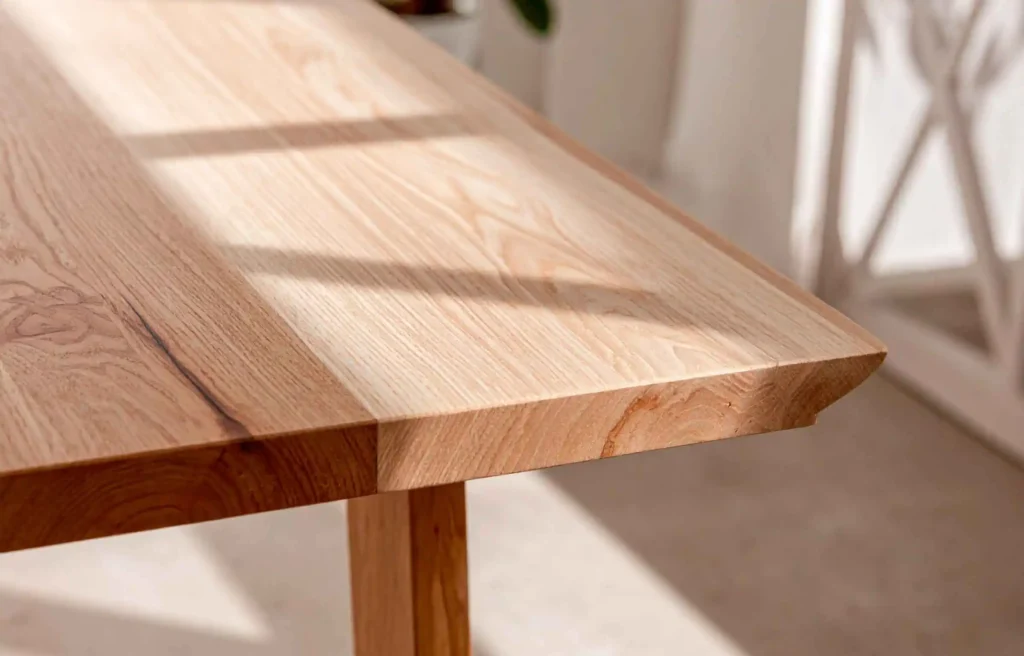
White oak – Moderate grain density with good moisture resistance if properly sealed. Research shows white oak experiences only 4-5% swelling compared to 8-10% for softer woods. A solid middle choice if budget is a concern. Understand sourcing benefits.
Pressure-treated pine – Grain is modified through chemical treatment to increase decay resistance. Not as elegant as premium options, but the grain modification actually improves durability significantly. Good for budget-conscious buyers willing to do more maintenance.
The grain matters more than the species. A well-selected cedar piece with straight grain might last longer than a poorly-selected teak piece with irregular grain. But if you can afford it, premium woods with consistent, tight grain are the safest bet.
For detailed specs on 200+ wood species, explore the Hardwood Manufacturers Association database. Compare wood options for your project.
Recommended read – What Makes Indonesian Teak Outdoor Furniture Ideal for All Seasons?
The Role of Grain Direction in Assembly
When furniture makers assemble outdoor pieces, grain direction becomes a critical structural consideration.
Joints are where furniture fails most frequently. The type of grain at the joint affects how well it holds –
- End grain joints (grain running perpendicular to the joint) – Weakest, prone to splitting
- Long grain joints (grain running parallel to the joint) – Stronger, better grip for fasteners
- Mixed grain joints – Medium strength, require proper technique
Professional builders minimize end-grain joints in outdoor furniture because end grain absorbs water rapidly, leading to rot and joint failure. This is why quality outdoor pieces cost more. They are designed with grain direction in mind at every connection. See how durable joints are built.
Signs of Grain-Related Failure
Before you buy used furniture or keep your existing pieces, you should know what grain failure actually looks like. Research from the American Society of Wood Engineers indicates that grain-related failures account for 35-40% of outdoor furniture damage. Knowing what to watch for could save you from inheriting someone else’s problems.
Radial checking (cracks radiating from the center) – Cracks spreading out like spokes on a wheel, emanating from the middle of a table or chair. This happens because the grain in the center is stronger and resists shrinking, while the surrounding wood shrinks faster. The result – stress cracks that branch outward. Studies show checking can reduce structural strength by 20-30%. This is a clear sign of grain-related stress.
Cupping or warping – The edges of a board rise or dip, like a boat hull. This indicates different grain sections have experienced different moisture levels and expanded/contracted at different rates. It’s a telltale sign that the wood grain isn’t uniform enough to handle outdoor conditions.
Surface splitting – Fine cracks following the grain lines. You’ll literally see the wood splitting apart along those grain patterns. This typically reduces load-bearing capacity by 25-50%. Not just a cosmetic issue. A split piece is weaker.
Soft spots – Areas that feel spongy or soft to the touch. This indicates the grain structure has broken down due to rot or insect damage. Once this starts, structural failure isn’t far behind.
If you notice these issues, your furniture’s structural integrity is compromised. It might still be usable, but it’s on borrowed time. All Seasons Furniture provides warranty support for structural failures like these. Check what to look for before buying furniture.
Caring for Wood Grain in Outdoor Furniture
Here’s the good news. Proper maintenance can dramatically extend your furniture’s life. National Wood Preservation Association data shows that properly maintained outdoor wood furniture lasts 3-4x longer than neglected pieces.
You’re protecting your investment –
Annual sealing is non-negotiable for outdoor wood. Here’s why – exposed grain is vulnerable grain. A good seal minimizes moisture penetration through the grain’s exposed surface. Use marine-grade finishes specifically designed for outdoor wood.
Stains that work with grain – Choose finishes that highlight the grain while protecting it. You want the wood to breathe slightly. Let moisture move in and out gradually rather than trapping it inside. Professional finishes can extend furniture life by 5-10 years compared to unfinished wood.
Penetrating oils versus surface coats – This matters. Penetrating oils (like teak oil) soak into the grain and work with the wood’s natural structure. Polyurethane sits on top like a plastic film. Research indicates penetrating oils outperform surface coats on exposed grain by 40%. Make smart choices about finishes.
Clean regularly – Debris and moisture pooling in grain depressions can trap water against the wood surface. Simple regular cleaning prevents this.
Inspect joints closely – This is where grain failure often starts. Studies show that end-grain rot starts 5x faster than face-grain because end-grain is exposed and porous. Check joints every season, especially corners and connections.
Reapply sealers – Every 12-18 months in normal climates. Coastal and harsh environments need annual resealing with special consideration for salt and moisture. Understand weather-resistant solutions.
Sand if necessary – If surface grain roughens and splinters, light sanding improves water runoff. Rough grain traps moisture. Smooth grain sheds it. Learn about multi-season furniture.
Strategic Placement Matters
You can’t control the weather, but you can control where furniture sits –
Avoid direct ground contact – Soil moisture wicks up into wood. Use furniture feet or pads to keep the wood from advancing and allow air circulation underneath.
Provide shade – UV rays degrade wood strength by 10-15% annually. Even one season of harsh sun damage is preventable with placement. Maximize your outdoor space with shade and protection.
Good air circulation – Allow grain to dry evenly after rain. Damp spots that stay wet invite rot. Plan your space for long-term durability.
Sum It All Up!
Wood grain fundamentally determines outdoor furniture durability. Understanding grain orientation, density, and fiber alignment helps you make smarter purchases, evaluate quality fairly, and maintain pieces properly. Smart selection and care extend lifespan by 3-4x. Before buying, ask about grain direction in structural elements and why manufacturers chose specific wood species. Quality furniture that respects wood grain principles becomes a lasting investment.
Wood Grain for Durable Outdoor Furniture
At All Seasons Furniture, we select premium wood with a consistent, predictable grain structure for every collection.
Our teak, cumaru, and hardwood pieces are built for demanding climates and heavy-use environments. For hospitality projects and large outdoor spaces, our manufacturing expertise ensures consistent grain quality across your entire furniture investment.
You get pieces engineered to weather years of exposure while maintaining structural integrity.
See our teak outdoor collections designed for grain strength.