
The Lasting Legacy of Old-Growth Teak in Outdoor Furniture Design
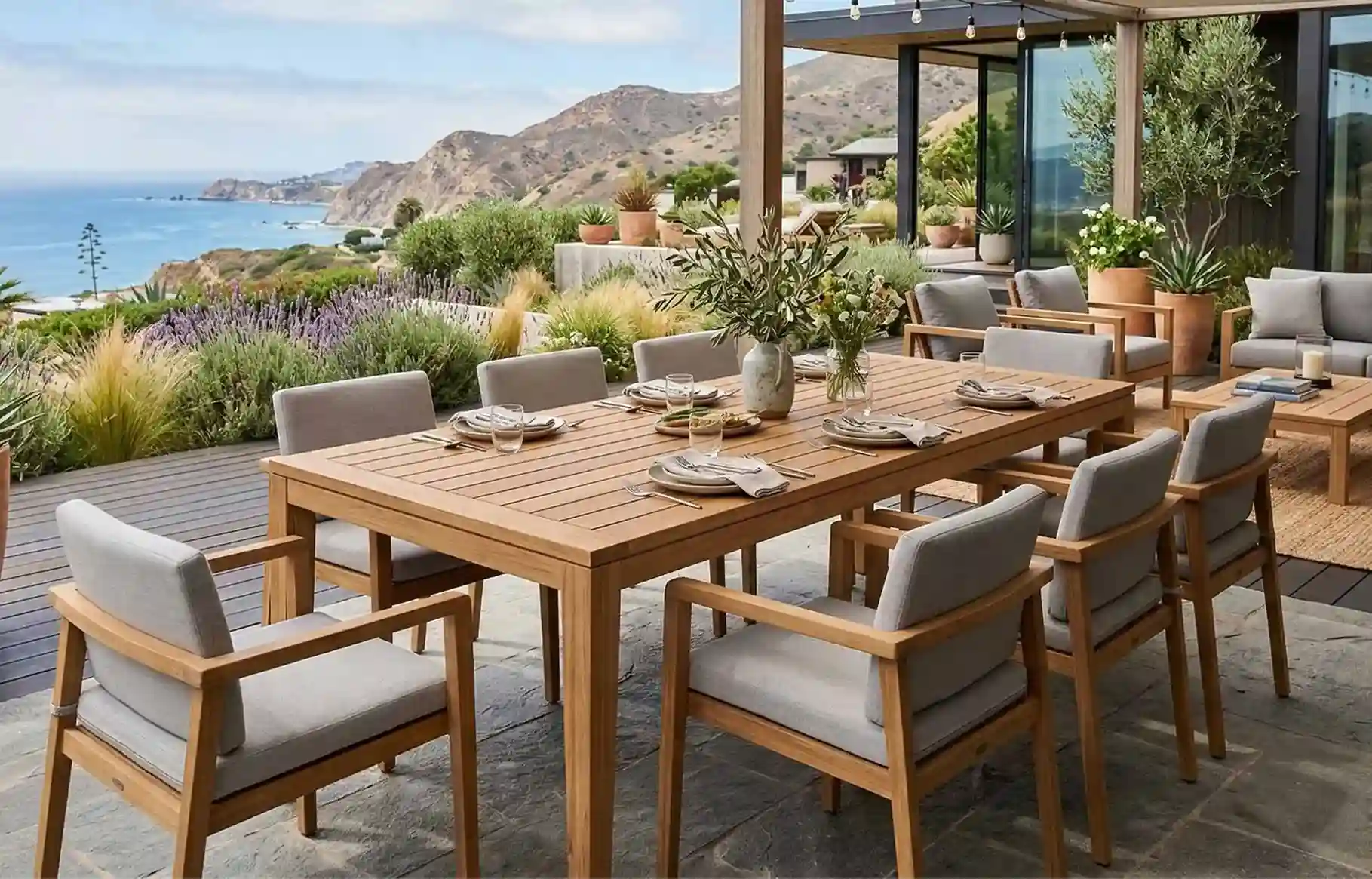
When shopping for outdoor furniture, teak comes up constantly. But there is a critical difference between teak varieties that most buyers do not understand. Old-growth teak comes from trees that have spent fifty to one hundred years developing in tropical forests. This is nothing like plantation teak, which gets harvested after just eight to twelve years. The difference comes down to time and development. Ancient trees accumulate qualities that younger specimens simply cannot match in a compressed timeline.
Research confirms what experienced furniture buyers already know. The International Teak Study Group documents that old-growth teak routinely lasts fifty years or longer in outdoor settings. That kind of longevity represents genuine value when compared to alternatives.
This article examines why old-growth teak has remained the preferred choice for outdoor furniture and whether the investment truly pays off.
What is old-growth teak?
Old-growth teak comes specifically from trees that have been growing for at least fifty to eighty years, with premium grades sourced from trees exceeding one hundred years old. These are not commercial plantation trees.
They have developed in competitive forest conditions, weathering storms, managing water stress, and continuously building internal structure. That struggle produces remarkably different wood compared to accelerated plantation growth.
Density represents the most measurable difference. Data from Forestry and Forest Products shows that a one-hundred-year-old teak can be 40% denser than plantation varieties. Density determines everything: denser wood resists rot, insect damage, and weathering far more effectively. The weight of teak pieces reflects this internal quality. That heaviness in the hand indicates superior structural composition.
Understanding strong joint construction reveals why wood density matters. Dense wood allows for precise joinery that holds without deterioration across decades.
Related – Why Developers Are Choosing Indonesian Wooden Furniture for Villa Developments
What do growth rings reveal about quality?
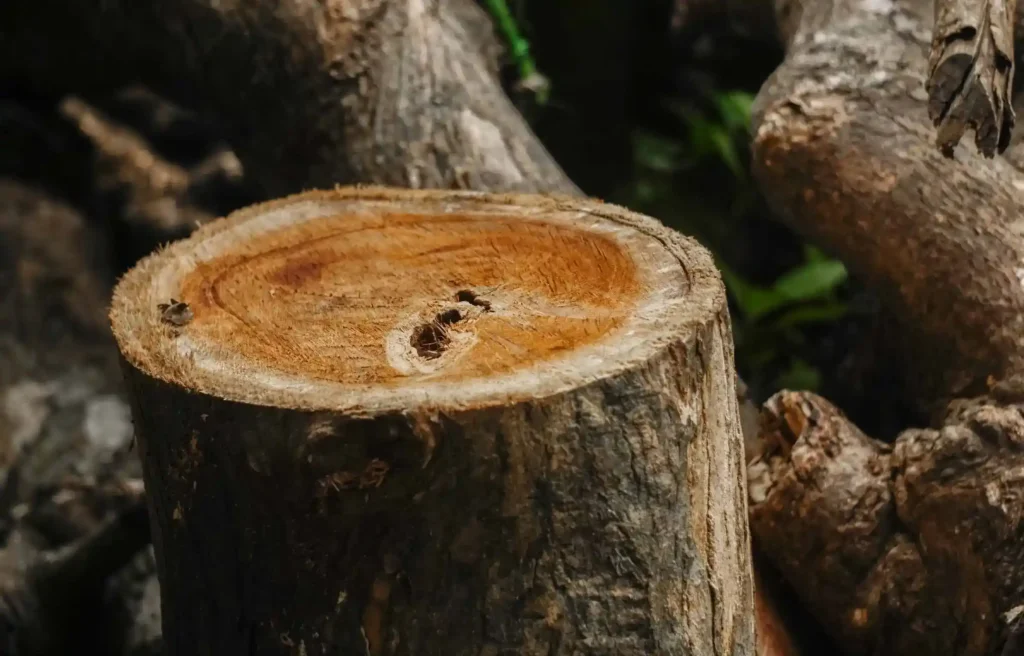
Growth rings document a tree’s history. Each ring represents one year of development. In tropical rainforests, conditions create constraints. Trees compete for light, water, and nutrients. This competition forces slow, methodical growth, resulting in dense wood layers. That is exactly the opposite of plantation environments, where rapid growth is the goal.
The Smithsonian Institution’s Wood Collections provides clear documentation of this pattern. Old-growth specimens show growth rings of approximately one to two millimetres per year. Plantation teak typically shows annual rings measuring 5 to 8 millimetres. This seemingly small difference creates enormous variations in wood strength and performance.
When choosing restaurant patio furniture, understanding ring density explains why teak handles constant exposure and heavy use better than alternatives.
Why do old trees have natural oils that young trees lack?
Teak trees produce natural oils as a survival mechanism in tropical forest environments. These oils provide protection against moisture infiltration and biological damage. The longer a tree lives, the more thoroughly it accumulates oils throughout its structure. Older trees essentially become saturated with natural protection.
Research from the University of British Columbia’s Wood Science Department quantifies this difference. Teak contains approximately twelve to 15% oil by weight, while plantation teak ranges from three to 5%. This disparity explains why old-growth furniture requires minimal maintenance compared to younger wood varieties that demand regular treatment.
Testing conducted by the American Society for Testing and Materials (ASTM) D1141 demonstrates that untreated teak withstands over two thousand hours of salt spray exposure. This extraordinary resistance makes it ideal for coastal installations where salt air aggressively attacks most materials.
How does old-growth teak handle constant environmental stress?
Wood naturally responds to changes in moisture and temperature. Rain causes swelling. Dry seasons create shrinkage. Poorly constructed furniture fails when repeated movement loosens connections and destabilizes frames. Teak moves less dramatically because its dense structure restricts movement.
The Forest Products Laboratory has conducted extensive testing on moisture behavior. Old-growth teak exhibits only four to 5% radial shrinkage from saturated to completely dry conditions. This minimal movement means joints stay tight, frames maintain square geometry, and structural integrity persists across decades.
Does choosing old-growth teak represent environmental responsibility?
Concerns about teak sourcing are legitimate. Ancient forests represent irreplaceable ecosystems. However, the environmental equation becomes more complex when calculating lifecycle impacts. A furniture set lasting fifty years requires far fewer replacements than cheaper alternatives, requiring replacement every twelve to fifteen years.
The International Organization for Standardization (ISO 14040) lifecycle analyses demonstrate that a single teak set used for fifty years generates lower environmental costs than purchasing three replacements of cheaper furniture over the same timeframe.
Manufacturing, shipping, and disposal multiply with repeated replacements.
The Forest Stewardship Council (FSC) certifies responsible sourcing practices. Additionally, many manufacturers now utilize reclaimed teak salvaged from demolished buildings, reducing pressure on remaining forest resources.
Also read – Why Outdoor Space Is Your Cafe’s Secret Weapon
What happens when old-growth teak meets time and weather?
The transformation begins gradually, almost imperceptibly. Fresh teak displays warm golden brown coloring. A particular richness that seems to glow from within the wood. As years accumulate, as sun and weather and seasons assert their influence, the color shifts. The surface develops a silver gray patina. This represents not deterioration but metamorphosis. The underlying wood remains structurally intact while the exterior transforms into something weathered, distinguished, possessing the particular beauty that only time can confer.
Scientists at the University of Applied Sciences in Solothurn, Switzerland, have determined that this gray layer functions as a protective mechanism. Surface oxidation creates a natural shield against ultraviolet radiation. Other woods crack and splinter.
Teak grows more distinguished with the years, developing a character that speaks of endurance.
Is premium pricing actually justified by the numbers?
The sticker price provokes initial resistance. A quality teak set commands $5000 or more. This represents significant capital. Yet financial reality, when examined with rigor, tells a different story than immediate emotion suggests.
A $5,000 set lasting 50 years costs approximately $100 annually. A $15,000 set lasting 12 years costs roughly $125 annually when replacement is inevitable.
Analysis by Consumer Reports confirms this comparison. Furthermore, vintage teak pieces appearing at auction retain sixty to 80% of original purchase prices even after fifty or more years. For those engaged in large-scale furniture sourcing for hospitality operations, this longevity ensures strong financial returns across decades of continuous use.
How does old-growth teak actually compare to everything else?
Other hardwoods exist: Shorea, cumaru, and Brazilian varieties. Each claims particular advantages. Some provide value. Yet performance data, when compiled systematically, renders judgment with clarity. The Journal of Wood Science documents that even plantation teak shows 40% lower bending strength compared to old-growth specimens. Other materials either lack comparable longevity or demand substantial maintenance investments that accumulate across time.
The International Organization for Standardization (ISO 13017) classifies all wood materials by durability categories. Teak occupies the highest possible ranking: Class 1 Very Durable. It achieves superior resistance to biological attack and environmental degradation. Few materials achieve this distinction.
What happens when ancient forests disappear?
Scarcity has a way of clarifying value. The World Wildlife Fund reports a historical transformation that borders on catastrophic. Teak forest coverage has declined from ten million hectares a century ago to approximately four hundred thousand hectares today. This represents a 96% reduction in available resources. The mathematical reality is straightforward: what remains becomes increasingly precious.
The International Tropical Timber Organization (ITTO) projects with confidence that premium teak prices will increase fifteen to twenty-five per cent annually through 2030. These projections reflect genuine supply constraints and accelerating demand from buyers who understand the value of durability. The window for purchasing authentic teak narrows each year predictably.
What does one acquire when purchasing old-growth teak?
Far more than furniture. Teak represents an investment in endurance. Pieces built from this material function reliably across decades with minimal intervention. They withstand weather that destroys lesser alternatives. They age with grace rather than deterioration. Quality pieces often remain relevant across multiple generations, becoming family artifacts rather than disposable commodities.
The combination of inherent durability and proven longevity creates an investment profile fundamentally different from cheaper alternatives that demand constant replacement cycles. In essence, one purchases not merely an object, but time: the valuable commodity that money alone cannot typically acquire.
Recommended read – What Defines Multi-Season Furniture in the B2B Real Estate Context?
Wrapping Up!
Old-growth teak remains one of the most respected materials in outdoor furniture design for a simple reason: time strengthens it. Decades of natural growth create dense grain, natural oils, and remarkable stability. These qualities allow furniture to endure weather, heavy use, and changing seasons without losing its character. For designers, architects, and hospitality spaces, old-growth teak represents more than a material choice.
It represents a commitment to durability, craftsmanship, and outdoor furniture built to last for generations.
Experience Authentic Old-Growth Teak
All Seasons Furniture is an Indonesian manufacturer specializing in teak outdoor furniture made from responsibly sourced timber. Rooted in Indonesia’s long woodworking tradition, our furniture reflects the durability and natural beauty that teak is known for.
Each piece is crafted to withstand outdoor conditions while maintaining its strength and character over time. Careful material selection and skilled craftsmanship ensure lasting quality.
From private outdoor spaces to large hospitality projects, our manufacturing expertise delivers consistent quality and reliable supply.
Contact us to explore our old-growth teak collections and furniture designed to endure.