
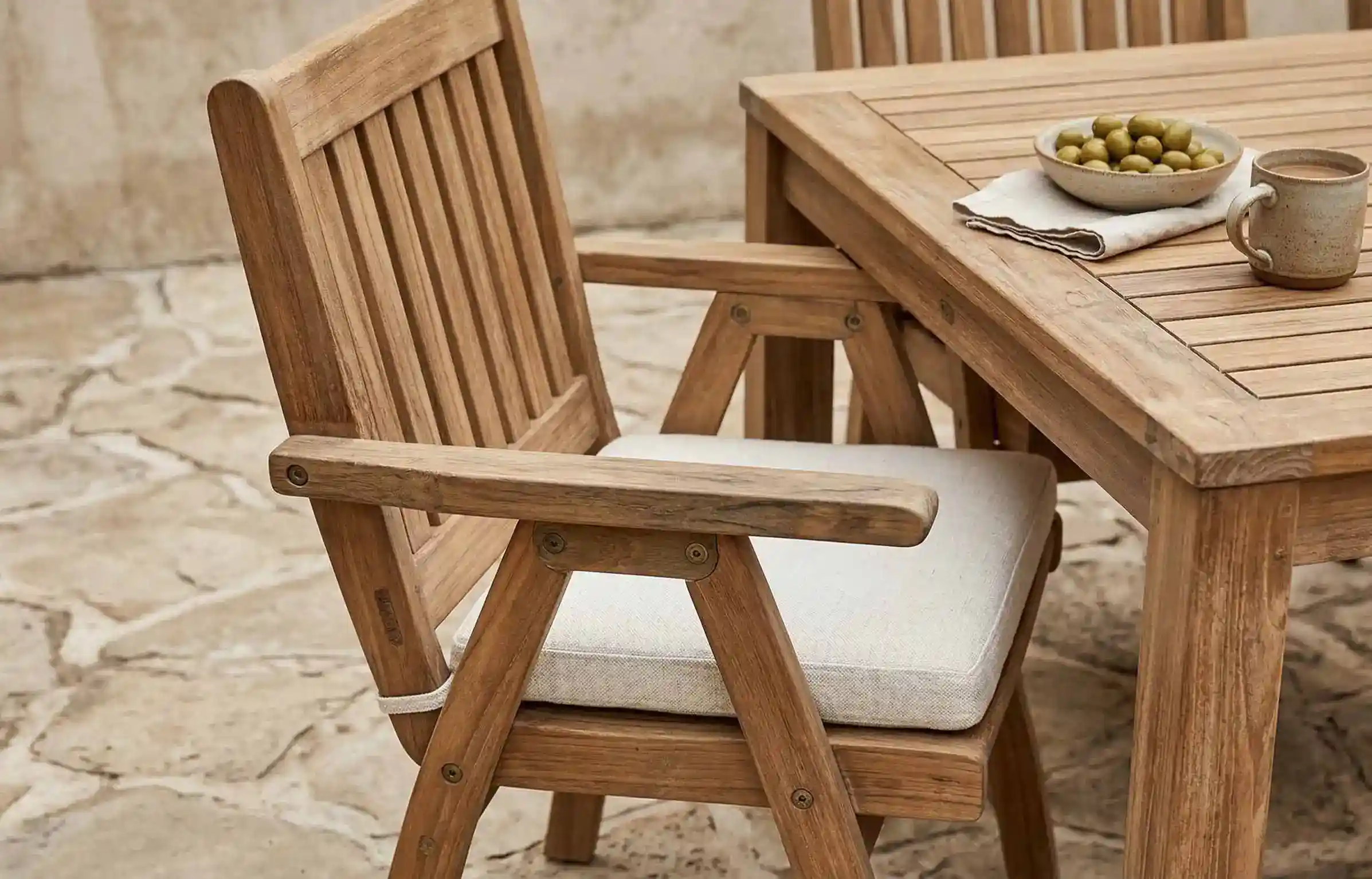
Old-Growth Teak vs Plantation Teak for Outdoor Furniture
Buyers now weigh durability against project budgets. In addition, designers compare material reliability. Lifecycle expense remains a major concern. Old-growth teak vs plantation teak gains importance. The global outdoor furniture market reached about $58.91 billion in 2026 and is expected to grow to nearly $92.08 billion by 2034 at a CAGR of 5.74 % (Fortune Business Insights).
Industry growth is tightening material evaluation standards. Timber origin, availability, and lifecycle performance now guide outdoor furniture planning.
Below you see a complete comparison of durability and performance.
What Defines Old-Growth Teak
Old-growth teak develops over many decades in natural forests. Slow biological processes create tight grain and high density.
Premium teak material used in outdoor decking or architectural projects can raise installation costs to about $25 to $60 per square foot, depending on craftsmanship and finishing quality. This reflects the scarcity of mature timber.
Limited availability often leads to selective use in signature outdoor furniture pieces. Older wood structures also tend to show reduced movement after machining. This stability can lower replacement frequency in commercial outdoor environments.
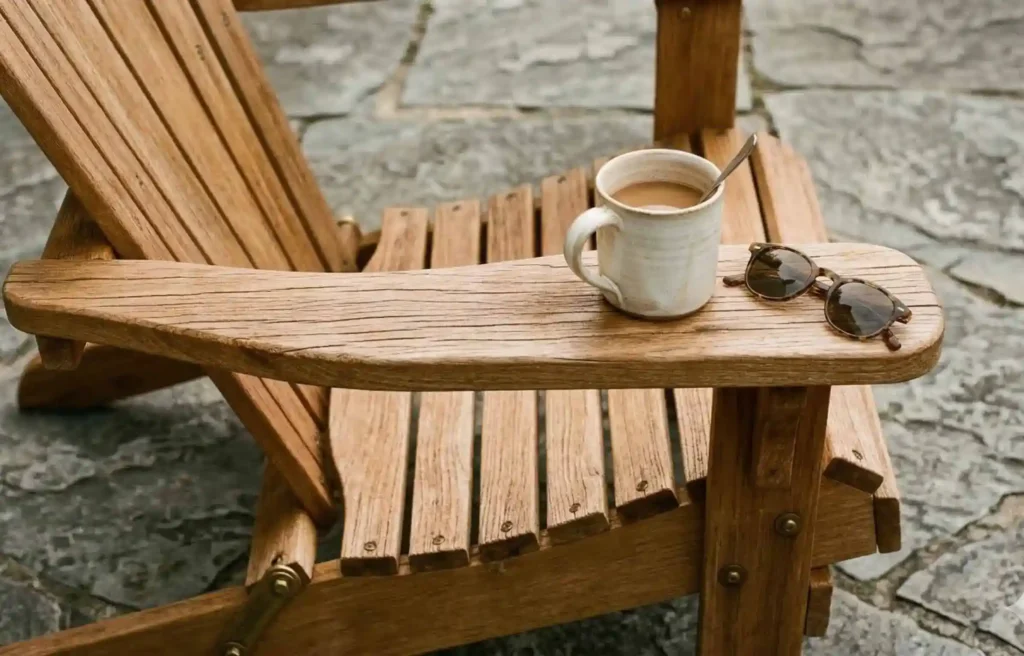
Related – The Lasting Legacy of Old-Growth Teak in Outdoor Furniture Design
How Is Plantation Teak Cultivated
Plantation teak grows in managed forestry systems with harvest cycles often between 20 and 30 years. Controlled planting supports a predictable supply.
The outdoor furniture market itself is estimated at $59.2 billion in 2026 and is projected to reach around $89.9 billion by 2033 with a CAGR close to 6.1 % (Persistence Market Research). Such expansion encourages reliance on plantation timber to meet large-scale demand.
Structured cultivation improves planning efficiency. Hospitality projects benefit from a predictable supply. Infrastructure developments require consistent material availability. Managed forestry supports reliable procurement timelines.
Does Density Influence Outdoor Durability
Density shapes structural endurance. Old-growth teak typically shows tightly packed fibres formed over long periods.
Furniture made from dense timber may resist surface wear during prolonged exposure to sunlight and moisture. The outdoor furniture sector is forecast to expand by about $5.16 billion between 2024 and 2029 (Technavio).
Growing demand places importance on materials that maintain performance across heavy usage cycles. Density, therefore, becomes both a technical and financial consideration.
How Do Natural Oils Affect Performance
Natural oils form within teak fibres. They help defend against pests. They limit water absorption. Older trees show stronger oil content.
These protective compounds can reduce maintenance costs over time. In premium outdoor developments, finishing and surface treatment budgets may account for a noticeable share of lifecycle expense.
Natural oils develop inside teak fibres. They protect wood from insects. They slow down moisture entry. Mature trees hold richer oil levels.
What Role Does Tree Age Play In Stability
Age influences internal stress patterns within timber. Mature teak tends to display better dimensional balance after manufacturing.
Furniture built from seasoned wood may hold alignment during seasonal temperature shifts. The global outdoor furniture market is projected to reach about $86.65 billion by 2033 with a CAGR near 6.3 % (Grand View Research).
Such sustained growth highlights the value of structural reliability. Buyers focus on materials that hold strength over time. Tree maturity influences stability and resistance. This factor shapes long-term performance planning.
Are There Visible Differences In Appearance
Old-growth teak develops a deeper golden brown colour. Its grain patterns appear richer due to slow natural growth.
Plantation teak generally appears lighter and visually consistent. Uniform appearance supports large hospitality installations where design rhythm matters. Bulk procurement strategies often balance visual harmony with cost efficiency.
Appearance becomes both an aesthetic and operational factor in outdoor furniture selection.
Also read – Why Bulk Outdoor Furniture Sourcing Requires Manufacturing Support
How Does Sustainability Shape The Decision
Environmental policies now guide timber sourcing decisions. Buyers pay closer attention to forest management standards. Plantation forestry supports renewable harvesting cycles. This approach helps maintain long-term material availability.
The outdoor furniture industry continues to benefit from rising consumer spending on outdoor living spaces and leisure infrastructure (Persistence Market Research).
Responsible sourcing supports ecological responsibility. It also supports commercial expansion. Certification systems now shape sourcing decisions. Traceability measures influence procurement approvals.
Does Humidity Impact Performance Differences
Humidity affects wood movement. It also impacts surface durability. Dense teak absorbs moisture slowly. It responds gradually to climate shifts.
Asia Pacific accounted for about 45.49 % of outdoor furniture demand in recent market assessments (Fortune Business Insights).
This regional dominance reflects climate-driven purchasing behaviour. Furniture performance testing increasingly considers moisture exposure cycles.
How Do Cost Structures Compare
Old-growth teak typically carries a higher upfront cost due to limited supply and harvesting constraints.
However, lifecycle savings may appear through reduced repair frequency. Large outdoor renovation budgets can extend into tens of thousands of dollars, depending on material grade and installation scope.
Plantation teak often supports predictable budgeting for volume procurement.
Cost comparison, therefore, requires evaluation across the full product lifespan.
Which Option Offers Longer Service Life
Service life depends on density, oil content, joinery precision, and finishing methods. Mature teak has historically demonstrated exceptional longevity.
At the same time, modern plantation timber can achieve comparable durability. This becomes possible through advanced seasoning methods. In addition, improved manufacturing techniques strengthen performance.
As a result, expanding global demand for outdoor infrastructure increases interest in both material types.
Durability ultimately results from combining material science with skilled craftsmanship.
Recommended read – The Hidden Cost of Cheap Outdoor Furniture in Hospitality Projects
In a Nutshell
Old-growth teak vs plantation teak highlights the meeting point of natural durability and managed production systems. Old-growth timber offers density and deep character shaped by time. Plantation teak provides continuity of supply and project efficiency. Outdoor furniture planning now integrates sustainability goals, lifecycle cost modelling, and climate performance testing.
Careful wood selection combined with expert craftsmanship helps teak furniture remain dependable across changing seasons.
Durable Outdoor Furniture Backed by Manufacturing Precision
All Seasons Furniture manufactures bespoke teak furniture for outdoor environments in hotels and large commercial settings. Careful wood sourcing and structural strength guide our production.
From design consultation to installation support, we help large projects maintain consistency and long-term value.
Get in touch to explore outdoor furniture collections built for enduring performance.