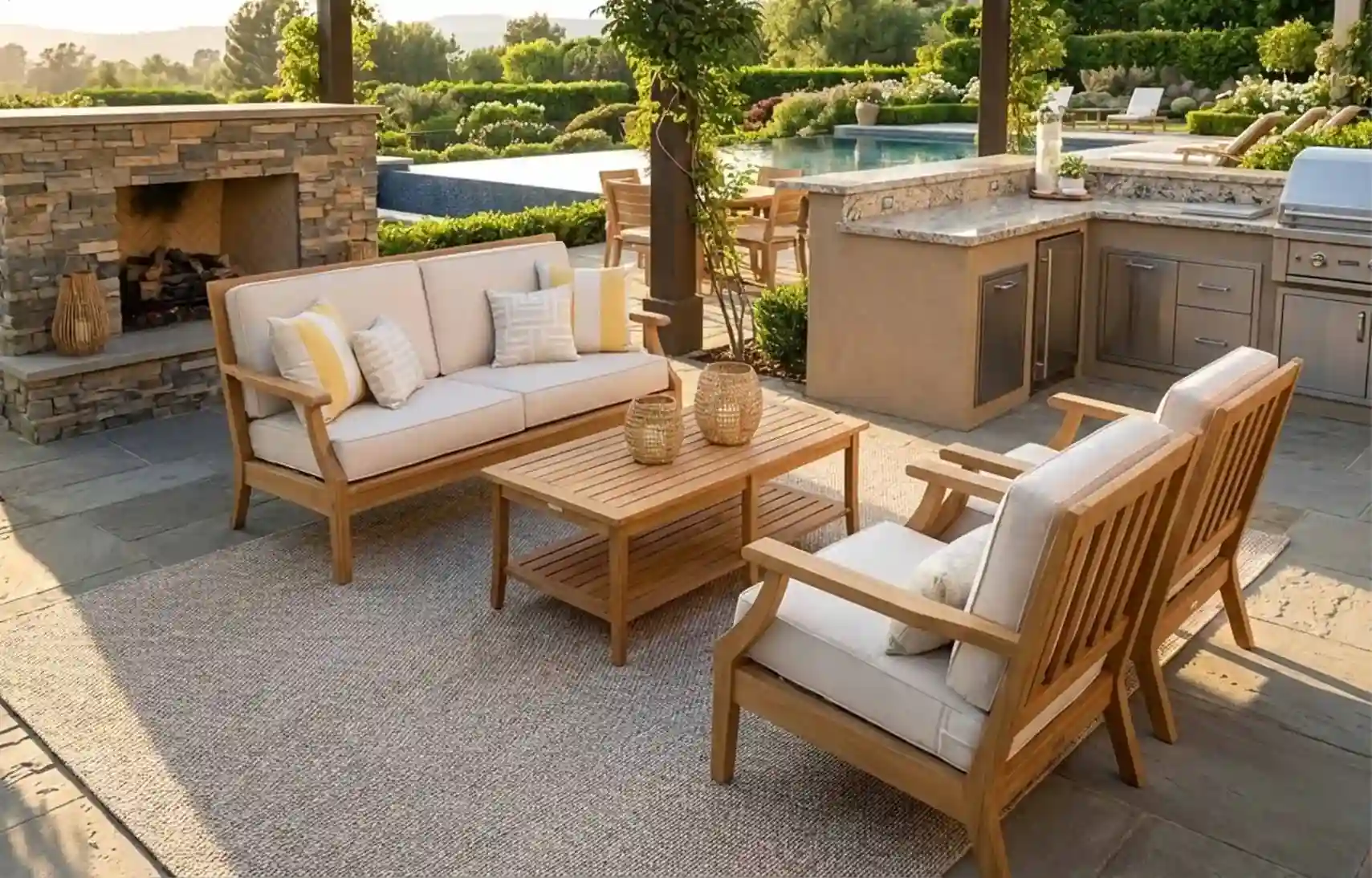
The Role of Joinery in Long-Lasting Indonesian Outdoor Furniture
Indonesian outdoor furniture stands in the open air year-round. Sunlight dries the surface. Rain settles into the grain. Wind and daily use place pressure on every connection. Over time, these forces reveal the true strength of the furniture. Materials matter, yet the real endurance lies in their construction. Materials matter, but construction decides durability. Most outdoor furniture lasts 5 to 15 years, while teak often lasts 15 to 25 years. Strong joinery keeps the structure stable.
Joinery forms the silent structure beneath the surface. It joins separate pieces of furniture into one balanced frame. Weak joints loosen slowly. Small movement grows into visible instability. A sturdy joint prevents this slow decline.
Careful joinery spreads weight across the structure. It keeps the frame firm through constant exposure to weather and use. Well-built outdoor furniture shows discipline in its construction. Each joint supports the next. The piece stands balanced and secure.
Through the craft of joinery, furniture gains the strength to remain useful and steady through many years outdoors.
What Is Joinery in Furniture Design?
Joinery refers to the method used to connect pieces of furniture together. It shapes the framework that holds the structure in place.
Rather than relying only on screws or nails, joinery uses carefully cut connections. Parts fit into one another with precision. This contact strengthens the bond between materials.
In outdoor furniture, these connections support the weight of the structure. They prevent the frame from shifting under pressure. A well-made joint allows the furniture to behave as one unified form.
Strong joinery creates stability that simple fasteners cannot provide.
Why Outdoor Furniture Needs Stronger Joinery?
Joinery is the process of joining separate furniture parts. It creates the frame that supports the entire piece.
Wood expands during moisture and tightens during dry weather. These shifts place strain on weak joints. Screws may loosen. Small gaps begin to appear.
Solid joinery resists this gradual damage. Interlocking joints keep the frame firm, even as materials adjust to seasonal change. The furniture retains its balance through years of exposure.
Durable outdoor furniture depends on joints that endure constant pressure from nature.
Related – Why Indonesian Wooden Furniture is the Smartest Investment for Villa Developments
How Traditional Joinery Improves Durability?
Traditional joinery methods remain respected in furniture making. Artisans developed these techniques through long experience with wood and structure.
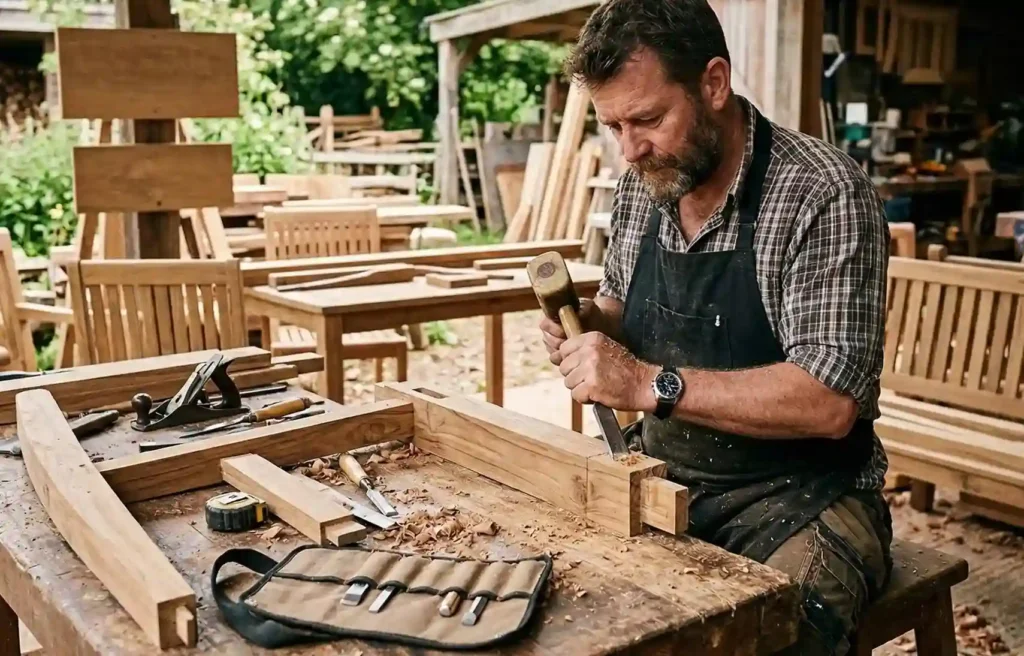
The mortise and tenon joint forms one of the strongest examples. A carved opening receives a shaped extension from another piece of wood. The parts lock together with strength and precision.
Dovetail joints offer another durable form. Their angled design prevents pieces from separating under tension.
These traditional techniques require careful work, yet they produce furniture known for lasting strength.
How Modern Joinery Supports Outdoor Furniture?
Modern furniture production also relies on refined joinery methods. Advanced tools allow precise cutting and consistent construction.
Engineered connectors and reinforced joints strengthen the frame while maintaining efficiency in manufacturing. These connections reduce the chance of assembly weakness.
Modern joinery combines mechanical precision with traditional design ideas. The goal remains the same. Strong connections that hold the structure steady.
Modern techniques strengthen manufacturing. Outdoor furniture lasts much longer.
How Joinery Handles Material Movement?
Outdoor materials respond constantly to the climate. Wood absorbs moisture, then dries again. These changes create expansion and contraction within the frame.
In wider panels, the effect becomes even clearer. For example, a 12-inch wood panel can expand by nearly 0.29 inches when moisture content shifts significantly, showing how much natural movement furniture must accommodate (Quality Cabinets).
Badly designed joints cannot handle this movement. Cracks form near weak points. The furniture slowly loses strength.
Proper joinery allows slight adjustment within the connection. The structure moves gently without losing stability. This balance protects the material from damage.
Furniture built with thoughtful joinery remains stable despite natural changes in the environment.
Also read – Why Retail Chains Source Their Outdoor Furniture Wholesale from Indonesia
How Does Joinery Strengthen the Structure?
The stability of Indonesian outdoor furniture depends on the connection between its parts. Legs must support the weight. Frames must remain square and balanced.
Strong joints distribute pressure across several surfaces. This reduces stress on any single component. The structure holds firm during daily use.
Without reliable joinery, the frame begins to shift. Small instability leads to wobbling and eventual failure.
Good joinery keeps the structure solid through years of use.
How Joinery Helps Resist Weather Damage?
Moisture often enters furniture through small gaps in weak joints. Water slowly weakens wood and may lead to swelling or decay.
Quality joinery limits these openings. Tight connections reduce the path for moisture to enter the structure.
Many outdoor pieces also use protective adhesives or sealants within the joints. These materials add another layer of protection against weather exposure.
Such details protect the structure and extend the life of the furniture.
How Joinery Influences Furniture Lifespan?
Furniture durability begins with proper construction. Materials add strength. But poor joints reduce stability. Even strong wood cannot compensate for weak connections.
Weak connections loosen under pressure. The frame begins to bend or separate. Repairs become frequent, and the furniture loses reliability.
Well-crafted joinery prevents this gradual decline. The structure remains firm and balanced through years of use.
Strong joints allow Indonesian outdoor furniture to remain functional for a much longer time.
Why Does Craftsmanship Matter in Strong Joinery?
Joinery reflects the skill of the furniture maker. Each joint requires careful measurement and patient execution.
A precise fit ensures that pieces connect without strain or misalignment. This attention to detail strengthens the entire structure.
Skilled craftsmanship transforms simple materials into furniture capable of enduring daily use and outdoor conditions.
Quality joinery often reveals the difference between ordinary furniture and pieces built to last.
Recommended read – The Hidden Cost of Cheap Outdoor Furniture in Hospitality Projects
How Buyers Can Recognize Good Joinery?
Careful observation reveals the quality of joinery in outdoor furniture. Strong pieces show tight connections and balanced frames.
Visible mortise and tenon joints often indicate careful craftsmanship. Reinforced joints and well-aligned frames also suggest durable construction.
Furniture that relies only on exposed screws may weaken over time. These connections often loosen with regular use. Careful buyers look closely at the joinery. This helps them judge the long-term durability of the furniture.
Understanding these details helps people choose outdoor furniture built for lasting strength.
In a Nutshell
Joinery forms the quiet foundation of long-lasting Indonesian outdoor furniture. It binds the structure together and protects it from the steady pressure of weather and use. Through strong joints, the frame remains balanced and secure. Weight spreads across the structure rather than concentrating at weak points. The furniture holds its form through years of exposure to nature.
Old woodworking skills and modern tools serve the same purpose. They build joints that allow furniture to last.
Furniture shaped with thoughtful joinery offers more than daily function. It shows discipline in craftsmanship and a design built for long life.
Precision Joinery for Lasting Outdoor Performance
The strength of outdoor furniture depends on more than material. Durable joinery keeps each chair, table, and bench stable through years of weather and daily use.
All Seasons Furniture produces solid teak outdoor collections crafted with precise joinery and reliable construction methods. Each piece is designed to maintain structural strength in demanding outdoor environments.
For hospitality projects and large outdoor spaces, our manufacturing scale delivers consistent quality and dependable supply.
Get in touch to discover teak furniture crafted for outdoor durability.