12 Things to Check Before Buying Outdoor Furniture
Buying outdoor furniture seems simple at the beginning. Then the first season passes. Showroom perfection rarely lasts outdoors. Nearly 70% of outdoor furniture failures appear within two years due to sun, rain, and humidity. The sun slowly weakens its surface. Rain tests every finish. Humidity quietly seeps into the joints.
A careful purchase begins long before payment. It begins with the details.
These checks help avoid extra costs, reduce upkeep, and keep the space looking good for years.
1. Material Quality
Start with the material, not the look. Material choice shapes how furniture survives outside. Teak, aluminum, and stainless steel often perform reliably. Softer woods and thin metals often struggle.
Ask exactly what the frame and surface are made from. “Outdoor” on a label can mean many things.
The importance of material selection is also reflected in industry growth.
The Indonesian furniture market is projected to reach USD 15.2 billion by 2034, growing at a CAGR of 5.82%, driven largely by demand for durable hardwood furniture used in outdoor and hospitality spaces (Global Risk Community).
Good materials age differently. Buying outdoor furniture becomes easier when the materials are durable. Hardwood and solid metals withstand years of sun and rain. Poor materials may appear fine initially, but weaken quickly outdoors.
Related – Invest Wisely in Resort Outdoor Furniture for Lasting Value
2. Weather Resistance
Some furniture survivesthe weather. Some simply tolerates it for a short time. Look for pieces built to handle sun, rain, and humidity without constant repair.
A fragile finish or dry-looking wood often signals trouble. True weather resistance should be part of the material itself, not something applied later.
Good outdoor furniture handles seasonal changes with ease. Quality construction helps prevent fading, swelling, and surface damage.
3. Strength and Structural Stability
Sit on it. Lean back. Move it slightly. A strong chair feels steady right away. A weak one gives a small shake even before it has seen outdoor use.
Check the legs, the frame corners, and the connection points. If it already flexes indoors, it will only get worse outside.
Durable furniture often shows strength in its structure. Solid joints and balanced frames keep the piece steady over time.
4. Comfort and Ergonomics
People use outdoor spaces to stay and unwind. Comfort should always matter more than style trends.
Check seat depth and back support. If the chair forces an awkward posture, guests will stand up sooner than you want. Comfort affects how long people remain in the space.
Good seating encourages people to relax outdoors. Comfort often determines how long guests remain in the space.
5. Maintenance Requirements
Some pieces look beautiful but demand constant care. Others stay presentable with basic cleaning.
Ask what upkeep is required. Does the wood need oiling? Does the metal need special cleaning? Do cushions need regular storage? Maintenance should fit your schedule, not the ideal version of it.
Clear maintenance expectations make ownership easier. Low-maintenance pieces fit well in homes and commercial settings.
6. Long-Term Durability
Outdoor furniture should be judged over the years. A cheaper option often costs more once replacements begin.
Look at thickness, construction quality, and how the furniture feels overall. If it seems light, thin, or fragile, it may be priced for short life.
Durability usually shows in the details. Weight, finish, and craftsmanship often signal furniture made to last through seasons of outdoor exposure.
7. Resistance to Insects and Rot
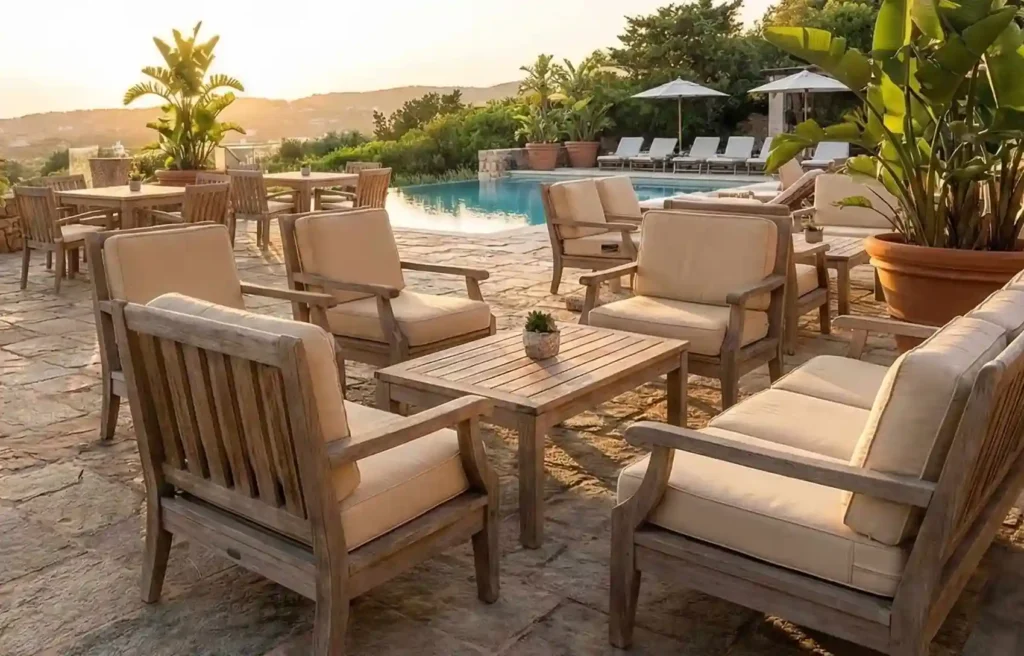
Outdoor wood attracts problems in humid climates. Moisture brings rot. Insects follow. Hardwoods like teak have natural resistance that makes a real difference over time. If the wood type is unclear, ask. If the seller avoids the question, take that as an answer.
Natural resistance reduces the need for chemical protection. It helps preserve the wood and extend the furniture’s outdoor lifespan.
Also read – The Hidden Cost of Cheap Outdoor Furniture in Hospitality Projects
8. Space and Layout Fit
Take measurements before buying outdoor furniture. Many patios and terraces feel tight because furniture was picked from photos instead of the proper scale.
Think about movement. People need space to pass behind chairs, pull out seats, and walk comfortably. A good layout feels effortless. A poor layout feels tight and awkward.
A balanced layout makes movement easier throughout the space. Good spacing creates a calm and functional outdoor area.
9. Design and Visual Balance
Outdoor furniture should suit the space around it. A resort terrace feels different from a quiet courtyard café. Even in a home garden, the style should feel natural beside the surroundings.
Look for proportion and calm design. Furniture that tries too hard often becomes tiring to live with.
Furniture with simple proportions often lasts visually longer than overly detailed designs. This is an important point to remember when buying outdoor furniture. Natural materials and clean lines keep their appeal for years.
10. Weight and Practical Mobility
Weight affects daily use. Very heavy pieces become difficult to move for cleaning or rearranging. Very light pieces can shift in the wind or feel unstable.
A good outdoor piece feels grounded, but still manageable. This balance matters more than most buyers expect.
Practical mobility also becomes important in commercial spaces. Outdoor furniture can be rearranged regularly for events or routine cleaning.
11. Usage Environment
Furniture near a pool faces splashes and chlorine. Coastal furniture faces salt air. Restaurant furniture faces constant turnover and heavy use.
Match the furniture to the environment. A piece that lasts in a shaded garden may fail quickly under direct sun and moisture.
The surrounding environment often determines which materials will perform best. Weather and location create very different demands.
Recommended read – How to Select Weather-Resistant Furniture for Open-Air Restaurants
12. Reputation of the Supplier
Outdoor furniture quality depends on who built it. A reliable supplier understands materials, joinery, and long-term performance.
Look for proof of experience. Past projects, clear material details, and consistent craftsmanship matter. If a supplier speaks in vague promises, the product often follows that same pattern.
Reliable suppliers explain their materials, construction methods, and durability clearly. Their experience often shows in how long the furniture lasts.
Bottom Line
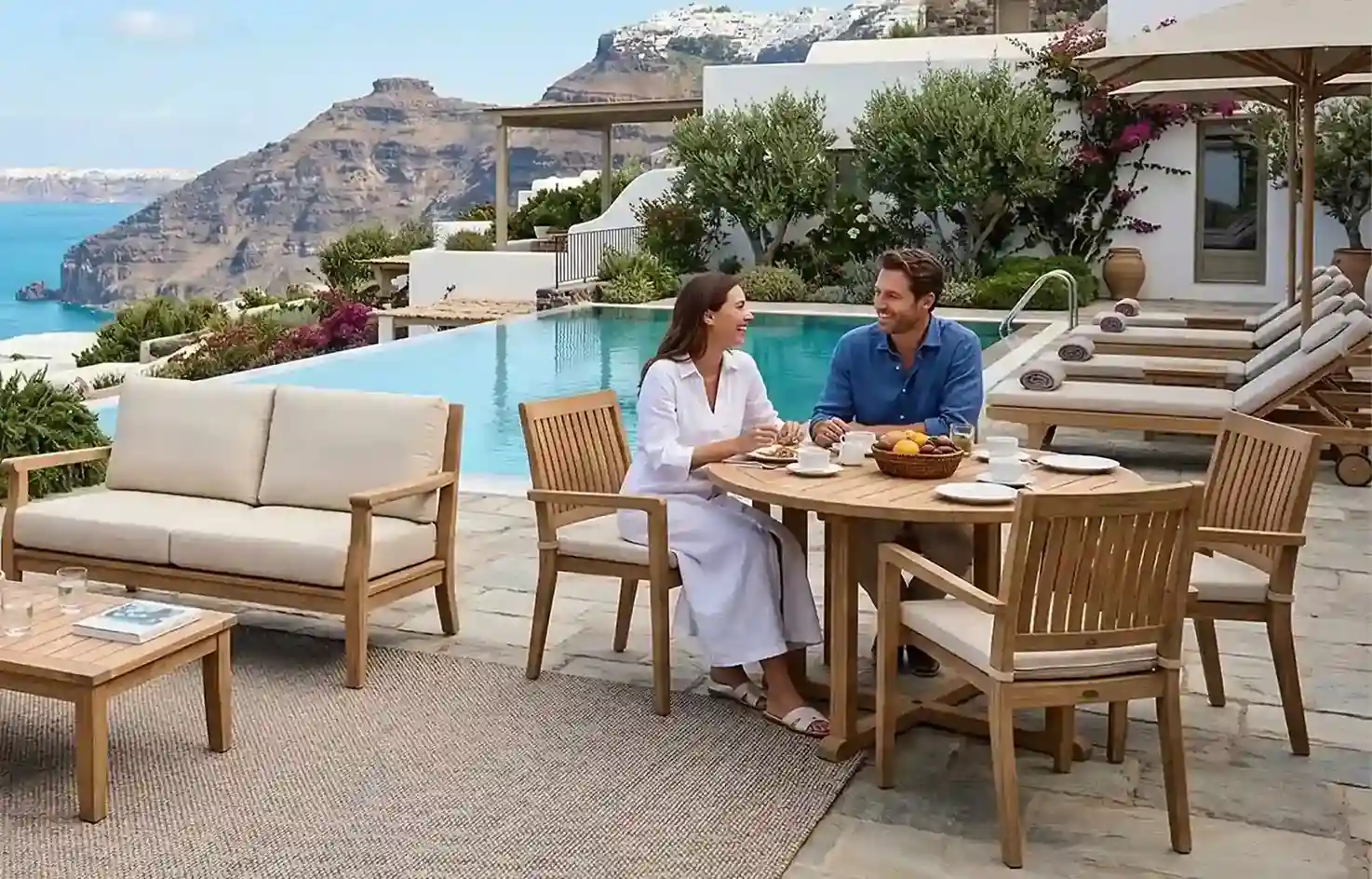
Outdoor furniture lives in a demanding environment. Sun, rain, and regular use quickly expose poor materials and careless construction. A careful check before buying outdoor furniture helps prevent regret later. The right furniture stays strong, looks better with time, and continues to welcome people into the space. Good outdoor furniture slowly becomes part of everyday life. It holds conversations, shared meals, and quiet evenings.
Choosing well at the beginning helps the space stay welcoming for years.
Built for Hospitality Outdoor Spaces
All Seasons Furniture focuses on solid teak outdoor furniture. Each piece is built for demanding environments. Our collections support restaurants and resorts. We are also used in large commercial outdoor projects.
Each piece is built with attention to craftsmanship. Joinery is designed for strength. Materials are selected carefully. The result supports reliable outdoor use.
Reach out to us to discuss your project needs.